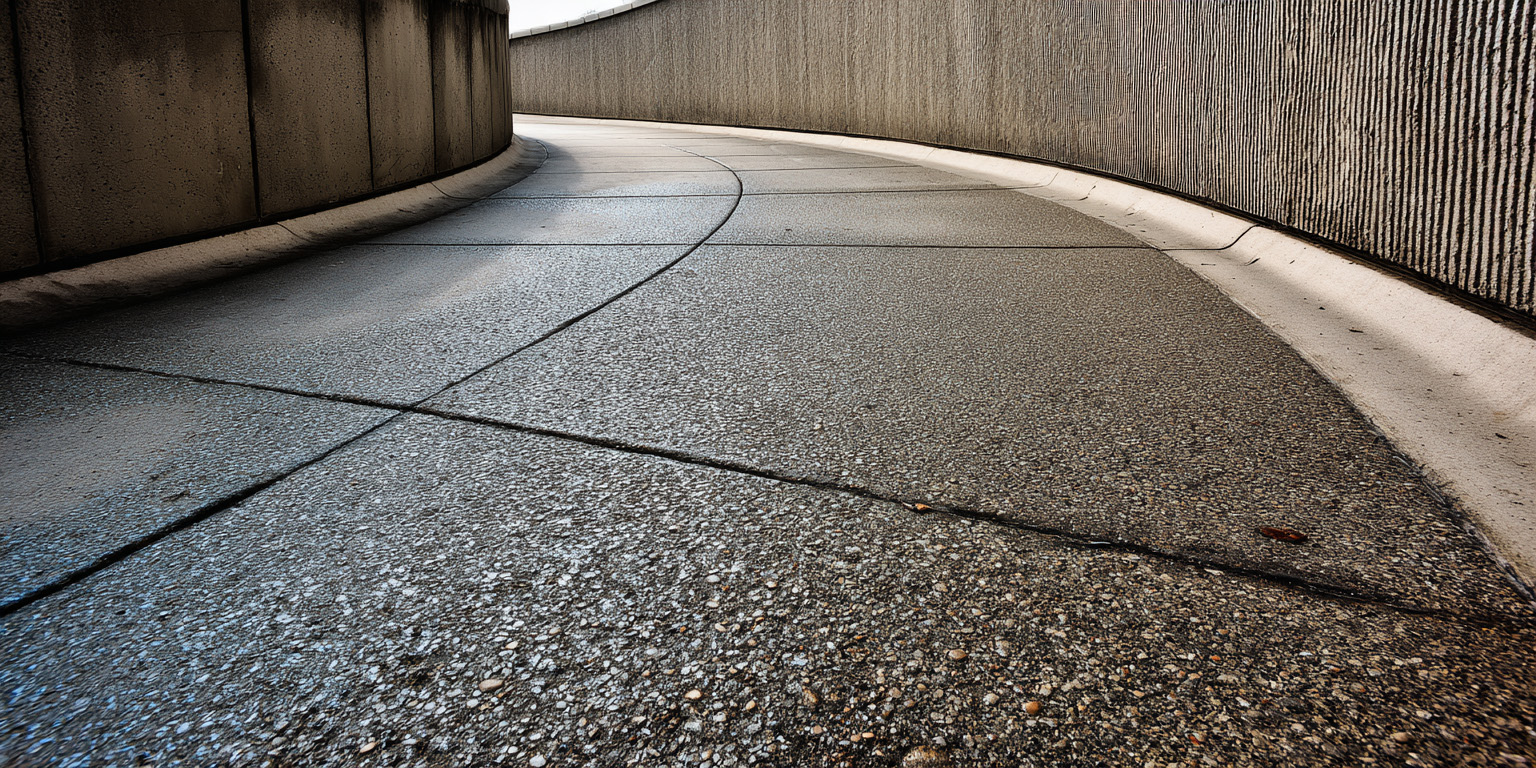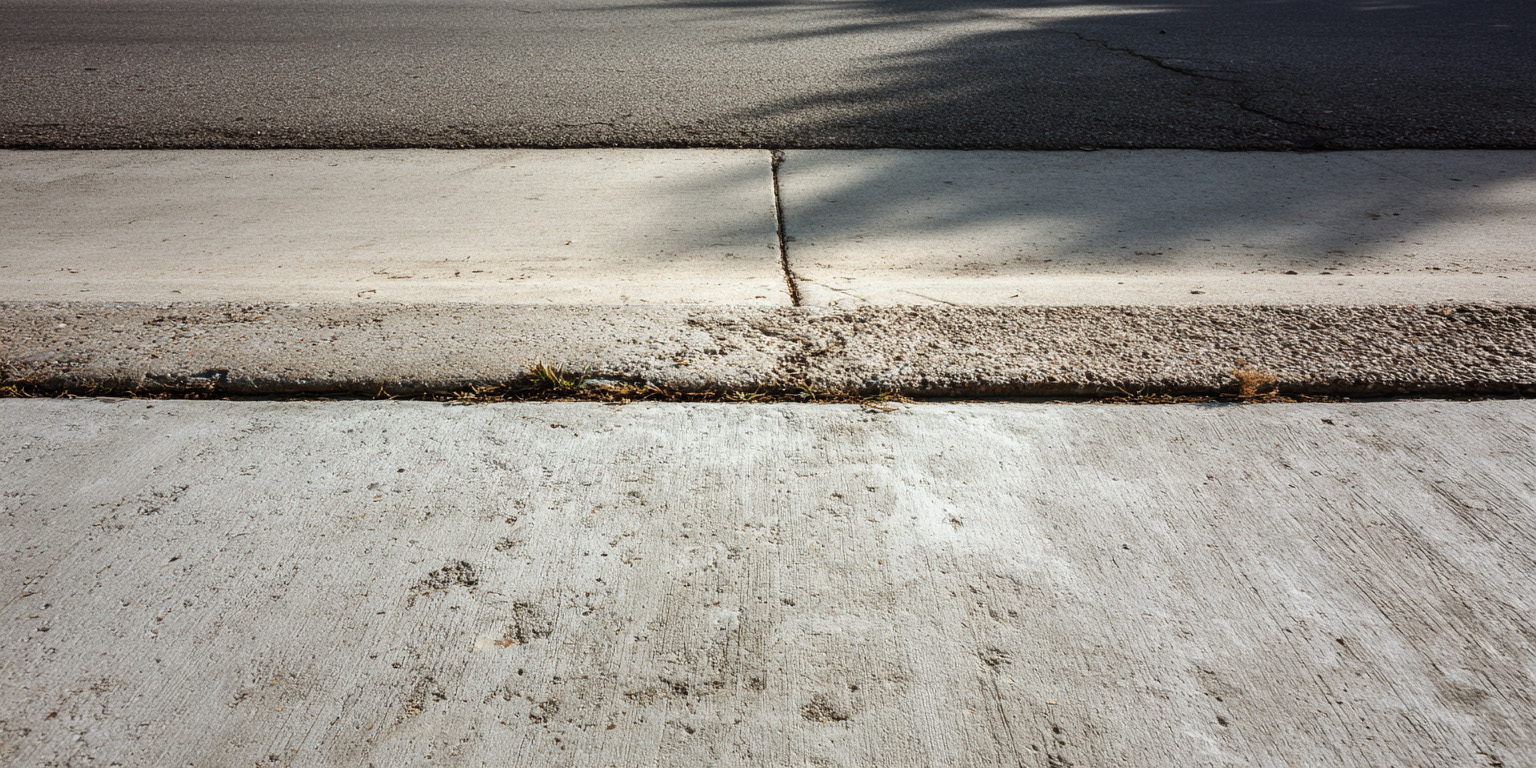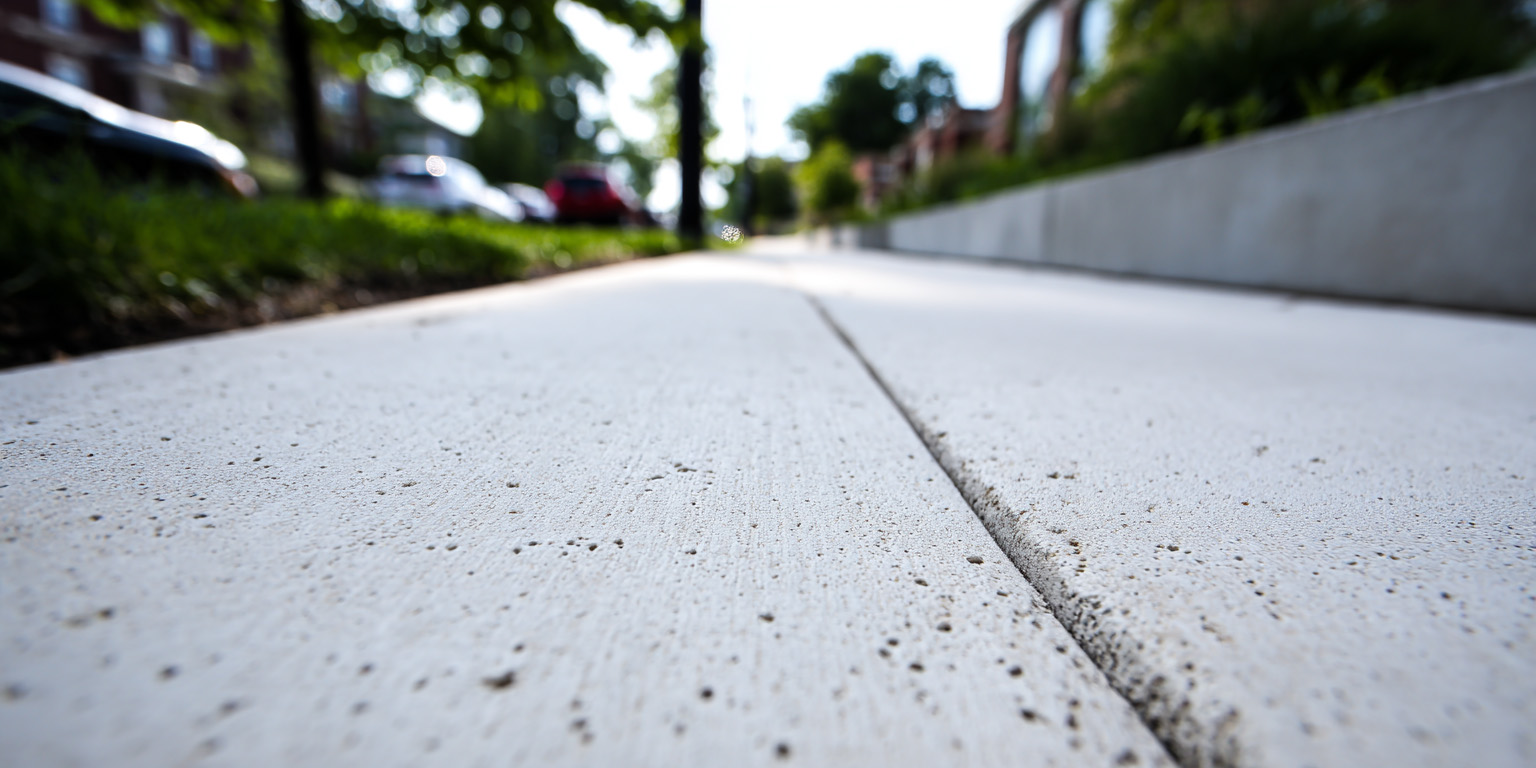





If you’ve noticed dark, blotchy areas spreading across your sidewalks, you’re not alone. Dark stains on concrete are extremely common, especially in high-traffic or damp areas.
But what actually causes these stains?
Dark stains on concrete sidewalks are typically caused by mold, mildew, algae, oil, dirt buildup, or environmental pollution embedding into the porous surface.
Understanding the source is the first step toward proper sidewalk cleaning and stain prevention.
Mold, Mildew, and Algae Growth
One of the most common causes of dark sidewalk stains is biological growth.
Concrete is porous and holds moisture, especially in shaded areas. When damp conditions persist, mold, mildew, and algae begin to grow.
These organisms create:
- Dark green or black discoloration
- Slippery surface films
- Uneven staining patterns
This type of staining is especially common near buildings, landscaping, and north-facing walkways.
Oil and Grease Tracking
Oil stains aren’t limited to parking garages. Grease and oil are often tracked onto sidewalks from:
- Parking areas
- Drive-thrus
- Dumpster enclosures
- Restaurant entrances
Over time, oil penetrates concrete and oxidizes, creating dark, stubborn stains.
Dirt and Pollution Buildup
Airborne pollutants, vehicle exhaust particles, and everyday dirt accumulate gradually.
As rainwater washes debris across sidewalks, contaminants settle into low spots and porous surfaces. Repeated cycles of buildup create darkened patches.
This is especially common in urban environments and near busy roadways.
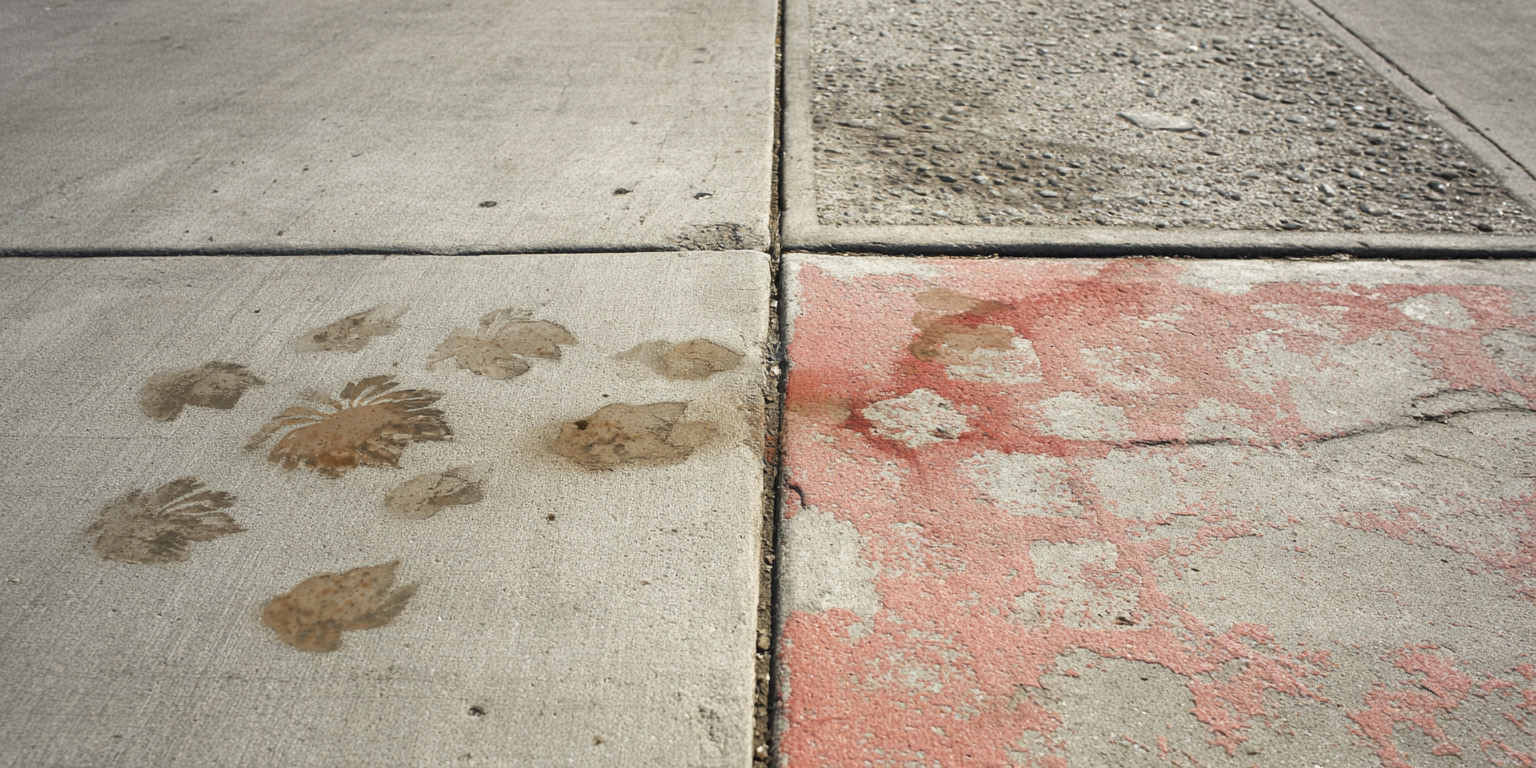
Rust and Mineral Deposits
Irrigation systems, metal fixtures, and landscaping features can cause rust or mineral staining.
When water containing iron or other minerals sits on concrete, it leaves behind dark or reddish-brown marks that worsen over time.

Organic Debris and Leaf Tannins
Leaves, mulch, and organic matter release tannins when they decompose. These natural compounds stain concrete with dark brown or black discoloration.
Properties surrounded by trees often experience this type of staining.
Why Dark Stains Get Worse Over Time
Concrete’s porous nature allows stains to soak in deeper if left untreated.
As contaminants penetrate further into the surface, they:
- Become harder to remove
- Spread beyond their original footprint
- Require more aggressive cleaning
Routine maintenance prevents permanent discoloration.
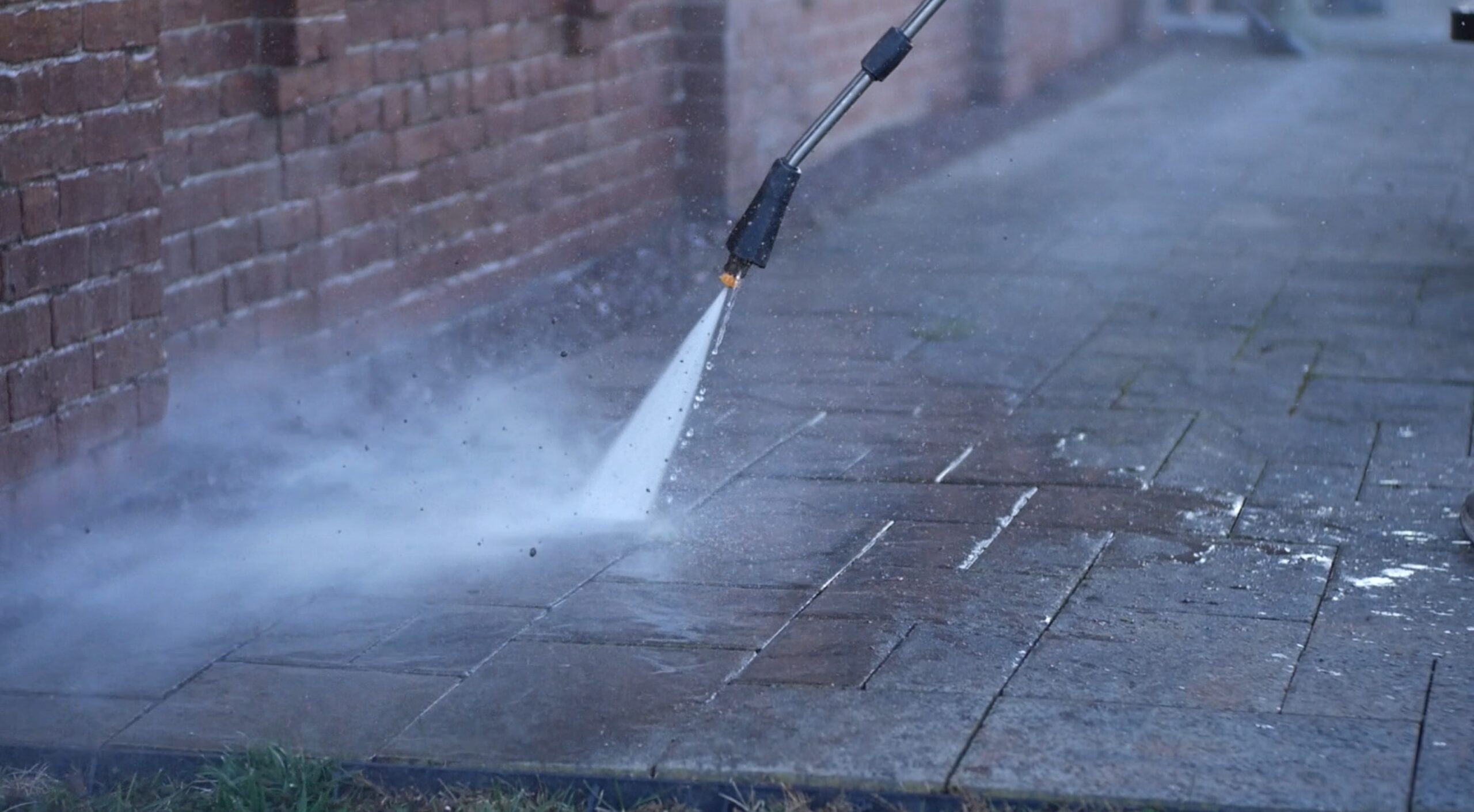
How Professional Cleaning Removes Dark Stains
Professional sidewalk cleaning uses:
- Heated water systems
- Surface-safe detergents
- Controlled pressure
- Specialized surface cleaners
Heat helps break down biological growth and oils, while proper pressure lifts embedded contaminants without damaging the concrete.
Regular service restores the uniform, bright appearance of your sidewalks.
How Often Should Sidewalks Be Cleaned to Prevent Staining?
Most commercial and residential properties benefit from annual cleaning at minimum, with higher-traffic areas requiring more frequent service.
In New England, post-winter cleaning is particularly important to remove salt and grime that contribute to staining.
Final Answer: What Causes Dark Stains on Concrete Sidewalks?
Dark stains on concrete sidewalks are usually caused by mold, algae, oil, pollution, organic debris, or mineral deposits embedding into porous surfaces. Without regular cleaning, these stains worsen over time.
Professional pressure washing restores appearance, improves safety, and protects long-term surface integrity.
Contact OFF THE WALL today to schedule expert sidewalk cleaning and remove stubborn dark stains from your property.
Contact Us Today!
Keeping New England Clean Since 1985
Power washing company serving Connecticut, Massachusetts, and Rhode Island
CT Li.# 0626878 – Fully Insured

More Posts About Sidewalk Cleaning